
The Gift of the In-Between
Executive coach and Her Allies volunteer Revital Padovitz on career transitions, the courage it takes to pause, and why community matters now more than ever.
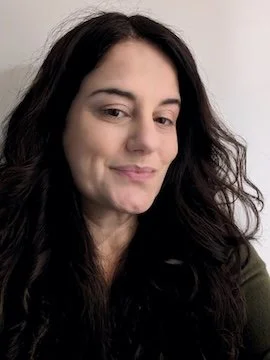
Revital Padovitz has lived the story that many of her mentees are living right now. She has relocated across continents, stepped away from work to raise children, and restarted in new cities without a professional network — at times with a résumé that felt suddenly foreign and the sense that the rules she had been operating by no longer applied. It is precisely because of those experiences, not despite them, that she shows up for the women in Her Allies' community with such grounded conviction.
Originally from Israel, Revital spent years working in tech across product teams and startups, including managing product teams at Meta. About two and a half years ago, she stepped back to ask herself harder questions: What do I actually want to do next, and where can I have the most impact?
"I wanted to see what I could build more independently," she explains. "I started investing in startups, mentoring, and at some point came across Women in Product and was invited to lead a coaching group there. Women's well-being and success at work is a cause I really care about; it's always been one of my two main pillars."
From Mentor to Facilitator
Her path to Her Allies began simply: she saw a call for mentors and volunteers on LinkedIn and responded. What she didn't anticipate was how deeply she would come to love the role of facilitator.
This year, she is evolving the program's coffee chat format, working with others to make it more workshop-like, structured, reflective, and communal. She believes that connection and self-examination are just as important as résumé tips and interview prep.
"I'm getting to know the volunteers and quite a few mentors and mentees have reached out to me to talk through career decisions," she says. "I really like that involvement and being part of that process."
Her personal experience with career gaps gives her a rare kind of empathy. When she moved from Australia to the US, and later from Seattle to the Bay Area, she had to rebuild her professional identity from scratch each time. She remembers the disorientation of it and the unexpected gift that came with it.
"The period of in-between is hard and often misinterpreted. People need community in those moments. That's what draws me to this work. I understand the position of going back to the workforce after not working for a while."
In 2016, she went through a similar return-to-work program herself. Some of the women she met there, bonded by the shared pressure of job-searching during difficult times, became close friends. The memory of that solidarity is part of what keeps her coming back to volunteer.
Coaching as Her North Star
Alongside her volunteer work, Revital has built a leadership coaching practice called Invergency, where she works primarily with founders and product leaders navigating team dynamics, conflict, and performance under pressure. She became a certified coach and found that the skills she honed in the corporate world as a product leader, particularly the ability to hold space for complex, competing needs, translated naturally into supporting others through change.
"Change and transitions are something I coach professionally," she says, " And I bring that experience of personal in-between into the work, because I've lived it”.
Having spent years in operating roles, she has also seen how often these moments are misdiagnosed as personal failure rather than as a shift in the environment.
One of her core observations is about the internal narratives that hold people back. When professionals are laid off, she notices, they often spend enormous energy guessing at the reason and then overcorrecting based on a story that may not be true.
"We have so many internal narratives that are blocking us. People who were let go don't always know why, and they're trying to overcorrect for a reason that might not even be the real one."
She is particularly attuned to how this plays out for women.
"Women tend to optimize more for collaboration, and we care more, sometimes in ways that are not rewarded in certain environments," she reflects.
Navigating a Non-Linear Future
Revital is clear-eyed about the moment we're in. The job market has changed dramatically. AI is reshaping entire industries. The notion of a linear career path has given way to something far more uncertain and far more demanding on the individual.
"Earlier in my career, I applied to six jobs and heard back from three and got two offers," she says. "Now there is so much more that needs to be done just to get noticed. And it's often not clear why things aren't working."
This uncertainty is part of what motivated her to reimagine the coffee chat format. People don't just need tactical advice: they need space to reflect, to question their assumptions, and to test which parts of themselves to lean into as the world shifts around them.
"The question I keep hearing is: should people lean into technology, or into judgment and the human end of things?" she says. “It’s not either-or. As technology advances, the bar for taste, for nuance, for genuine understanding is only going to rise. And those who engage early with AI and pair it with strong judgment are more likely to help shape how the work itself evolves”.
What Revital Believes Women Need Right Now
Community and honest reflection, not just job-search tactics
Help separating real feedback from internalized self-doubt
Permission to explore roles beyond their last job title
Advocates willing to take a chance on non-linear paths
Support that acknowledges ageism, illness, and career gaps as real — not as failures
One Mentee's Story
The work is not always straightforward. One of Revital's mentees had been out of the workforce for six years. During their time together in the program, the mentee became ill, and their sessions were interrupted. When they reconnected, Revital found that the real work wasn't about updating a LinkedIn profile; it was about rebuilding a sense of self.
"She was dealing with insecurity around the time gap, her illness, and ageism all at once," Revital recalls. "So we worked more on the deeper questions: What are your values? What are your strengths? What does this next chapter actually mean to you? It wasn't necessarily about going back to exactly what she'd done in tech implementations; it was about figuring out who she is now and what she has to offer."
It is that kind of work that is slow, human, and genuinely life-changing that keeps Revital committed to Her Allies.
"Any support we can provide women right now is critical," she says. "It's a system problem, and not everything can be solved at the individual level. We don't know when the system will be fixed. So we continue to show up for each other."